
New Data Highlights Agriculture's $1.9 Billion Impact on Johnston County |
Agriculture supports farms, food businesses and jobs across the county; the reported 18,000-job figure remains unverified |
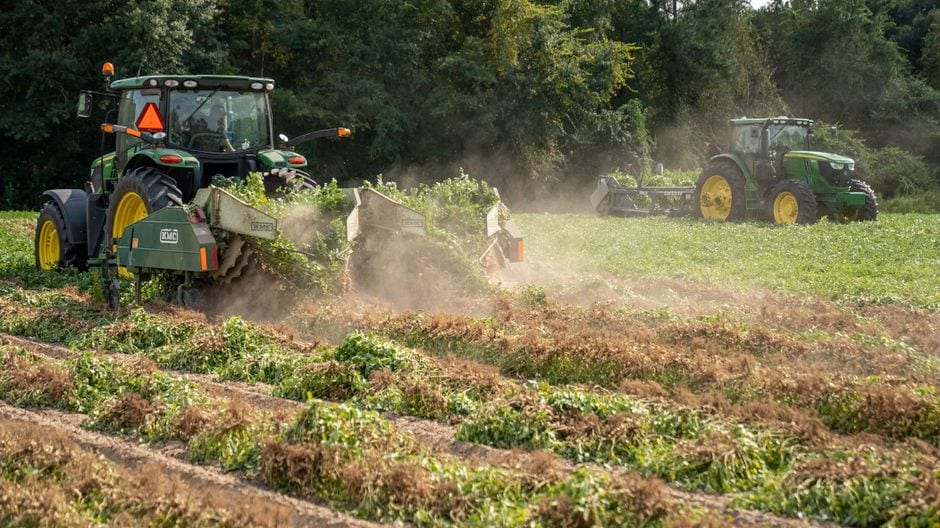
Johnston County farms by the numbers
The USDA's 2022 Census of Agriculture counted 964 farms in Johnston County covering 174,111 acres.
The census reported nearly $300 million in the market value of agricultural products sold, with crops accounting for 52 percent and livestock, poultry, and related products accounting for 48 percent.
Those figures show the county's mix of crop and animal agriculture. They also remind residents that the industry's economic value begins with real farms and the people who operate them.
Farm operations generate work for equipment dealers, feed and supply businesses, transportation companies and processors, alongside the people working directly in the fields and barns.
Why it matters for Clayton and nearby towns
Clayton, Smithfield, Selma, Four Oaks and other Johnston County communities share an economy in which farming and newer industries operate side by side.
For residents, the agricultural economy may be visible at roadside stands, farmers markets and local restaurants. Other parts of the supply chain are less obvious, such as transportation, processing and distribution.
Agriculture-related businesses can support employment across different skill levels, from farm management and equipment maintenance to logistics and food manufacturing.
The industry's reach is one reason agricultural research, workforce training and support for small businesses remain important to the region.
Growth and farmland
Johnston County has experienced substantial population growth, bringing new housing, roads and commercial development.
At the same time, farming requires land, infrastructure and long-term planning. The USDA census found that the county had fewer farms in 2022 than in 2017.
Understanding the economic contribution of agriculture helps residents see why farmland and agribusiness are part of the county's future as well as its history.
Where the numbers come from
Readers can explore the October 2026 National FFA account of the regional agriculture event, the NC State statewide economic impact analysis, and the USDA Johnston County agricultural census profile.
These sources use different reporting periods and definitions. Taken together, they point to a major conclusion: agriculture remains an important economic engine for Johnston County, with benefits extending from farms into businesses and households throughout the region.
The 2024 report's 17,920-job estimate shows how agricultural activity supports employment across farms and related businesses. The $757 million measure covers wages, salaries and proprietor income, not total economic output. |
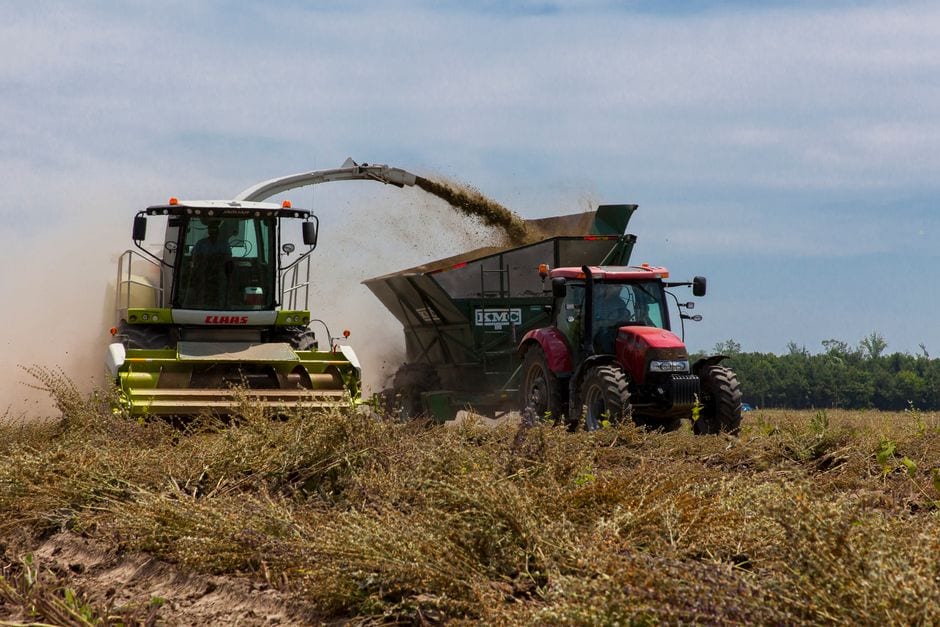 North Carolina farm harvest. Illustrative photo by Mark Stebnicki on Pexels; not confirmed as Johnston County. |
Johnston County farms by the numbers
The USDA's 2022 Census of Agriculture counted 964 farms in Johnston County covering 174,111 acres.
The census reported nearly $300 million in the market value of agricultural products sold, with crops accounting for 52 percent and livestock, poultry, and related products accounting for 48 percent.
Those figures show the county's mix of crop and animal agriculture. They also remind residents that the industry's economic value begins with real farms and the people who operate them.
Farm operations generate work for equipment dealers, feed and supply businesses, transportation companies and processors, alongside the people working directly in the fields and barns.
Why it matters for Clayton and nearby towns
Clayton, Smithfield, Selma, Four Oaks and other Johnston County communities share an economy in which farming and newer industries operate side by side.
For residents, the agricultural economy may be visible at roadside stands, farmers' markets, and local restaurants. Other parts of the supply chain are less obvious, such as transportation, processing, and distribution.
Agriculture-related businesses can support employment across different skill levels, from farm management and equipment maintenance to logistics and food manufacturing.
The industry's reach is one reason agricultural research, workforce training and support for small businesses remain important to the region.
Growth and farmland
Johnston County has experienced substantial population growth, bringing new housing, roads and commercial development.
At the same time, farming requires land, infrastructure and long-term planning. The USDA census found that the county had fewer farms in 2022 than in 2017.
Understanding agriculture's economic contribution helps residents see why farmland and agribusiness are part of the county's future as well as its history.
Where the numbers come from
Readers can explore the October 2026 National FFA account of the regional agriculture event, the NC State statewide economic impact analysis, and the USDA Johnston County agricultural census profile.
These sources use different reporting periods and definitions.
Taken together, they point to a major conclusion: agriculture remains an important economic engine for Johnston County, with benefits extending from farms into businesses and households throughout the region.
The 2024 report's 17,920-job estimate shows how agricultural activity supports employment across farms and related businesses.
The $757 million measure covers wages, salaries, and proprietor income, not total economic output. |
0 Comments
Join the conversation
Be the first to comment
Share your thoughts above.